In classic SEO the operational goal was to drive traffic to a well-positioned page. In generative systems, however, content must also be understandable to synthesize, consistent with other sources and reliable enough to be used as a basis for an answer.
This shifts the focus from isolated single elements to a system of clarity: clean hierarchical structure, paragraphs with a single idea per block, explicit definitions, unambiguous claims and alignment between title, intent and actual content. SEO for generative engines therefore requires a more systemic approach, where each element contributes to overall citability.
Generative engines reward content that can be easily extracted, synthesized and verified. This means that the quality of information structure becomes as crucial as traditional keyword density.
- keywords remain important, but not enough
- consistency between sections matters more than keyword stuffing
- citability also depends on framing quality
- source verifiability becomes a ranking factor
More citable content tends to have three characteristics: clarity, structure and verifiability. Clarity means using headings that truly anticipate the paragraph. Structure means organizing text as a framework and not as an indistinct flow. Verifiability means distinguishing opinions, interpretations and supported facts.
This is why it's convenient to work with operational checklists that guide production toward quality standards recognizable by generative systems:
- each H2 answers a real user question
- long sections are broken into readable sub-blocks
- factual claims have a source or revision note
- CTAs don't interrupt the information flow
- paragraphs maintain optimal length (3-5 lines)
- bullet lists highlight key concepts
These measures not only improve citability for AI Overview and generative engines, but also make content more usable for human users, creating a virtuous circle of quality.
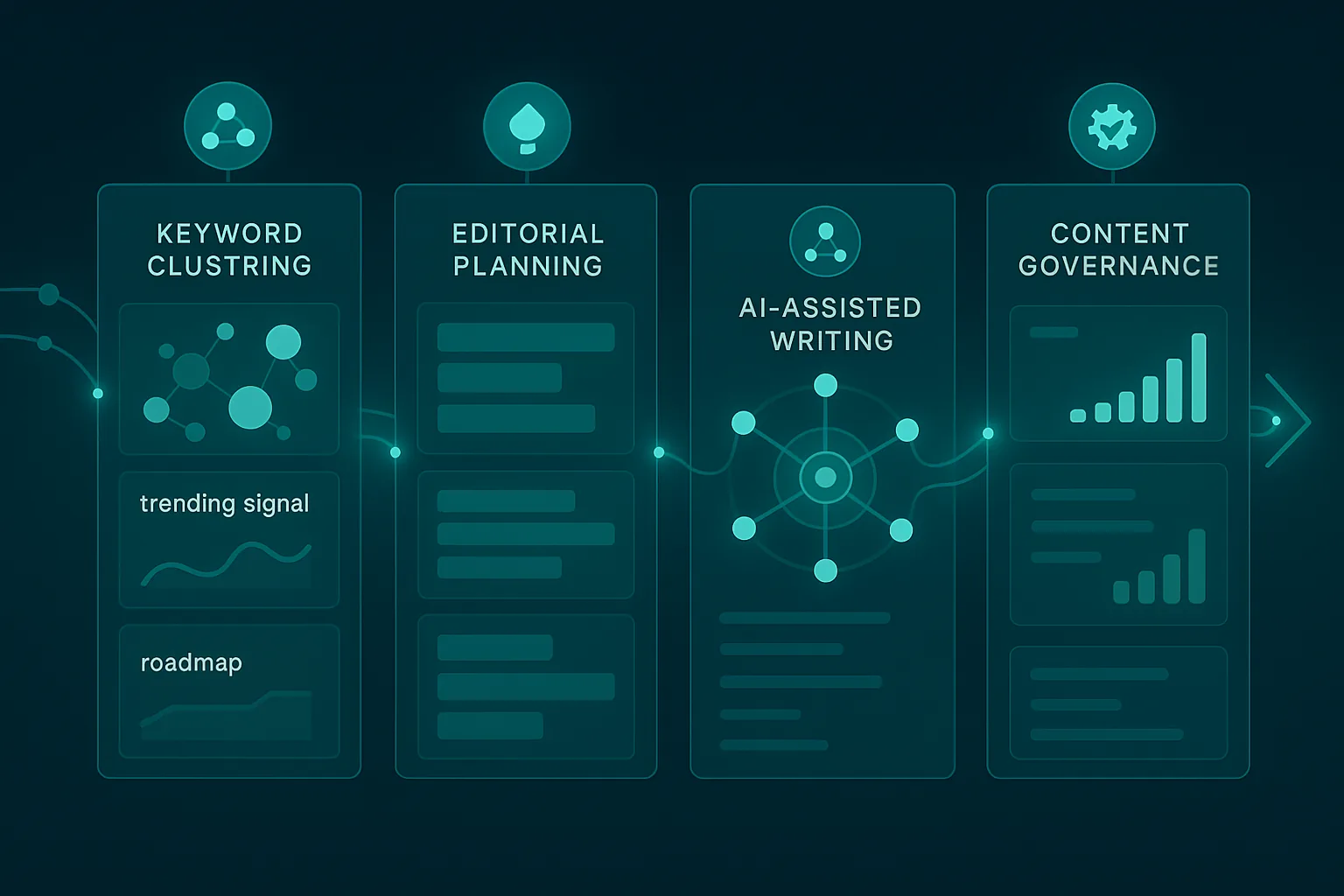
The critical point is not producing an article in a few minutes, but keeping it consistent with sources, positioning and future updates. If keyword research, competitor analysis, brand memory and editorial review live in separate tools, the risk is increasing volume but losing reliability.
An AI SEO workflow oriented to AI answers must therefore connect:
- query and search intent
- competitor evidence and real gaps
- approved knowledge base
- anti-overclaim and human review where needed
- publication and metadata optimization
- performance monitoring and continuous iteration
This is where the difference emerges between optimizing individual pages and orchestrating a more robust SEO system. SEO orchestration allows maintaining consistency across all produced content, ensuring each piece aligns with the overall strategy and verified sources.
Without an integrated workflow, the risk is producing content that competes with itself for the same keywords, contradicts brand positioning or contains unverifiable claims that damage the site's overall credibility.