Connect Google Search Console
One-time setup, no complex configurations
Authorize GSC access just once. AraLith COS immediately starts collecting daily snapshots of clicks, impressions, CTR and position for every page on your site.
Content decay is the gradual drop in rankings and visits that affects every piece of content over time. AraLith COS lets you automatically monitor position drops on Google and shows you where to act to recover lost organic traffic.
Daily snapshots from Google Search Console • Decay score for every page • Query analysis with estimated recoverable clicks
Content decay is the natural process by which web pages and articles progressively lose visibility, rankings, and organic traffic over time, even without being modified.
The main causes are three:
Identifying content decay early is crucial: stepping in when the decline is still limited allows you to recover lost organic traffic with minimal effort compared to starting from scratch.
of content loses positions within 12 months
average time before the first significant drop
more efficient to recover than to rewrite from scratch
The content decay (or SEO content decay) is the process by which pages and articles that once generated organic traffic progressively lose positions on Google, impressions and clicks. Monitoring ranking drops on Google is essential: content that loses positions can be recovered with targeted updates, before the lost organic traffic becomes difficult to win back.
AraLith COS includes a built-in content decay detector that analyzes Google Search Console data every day and assigns a decay score to each piece of content, flagging intervention priorities and estimating recoverable monthly clicks.
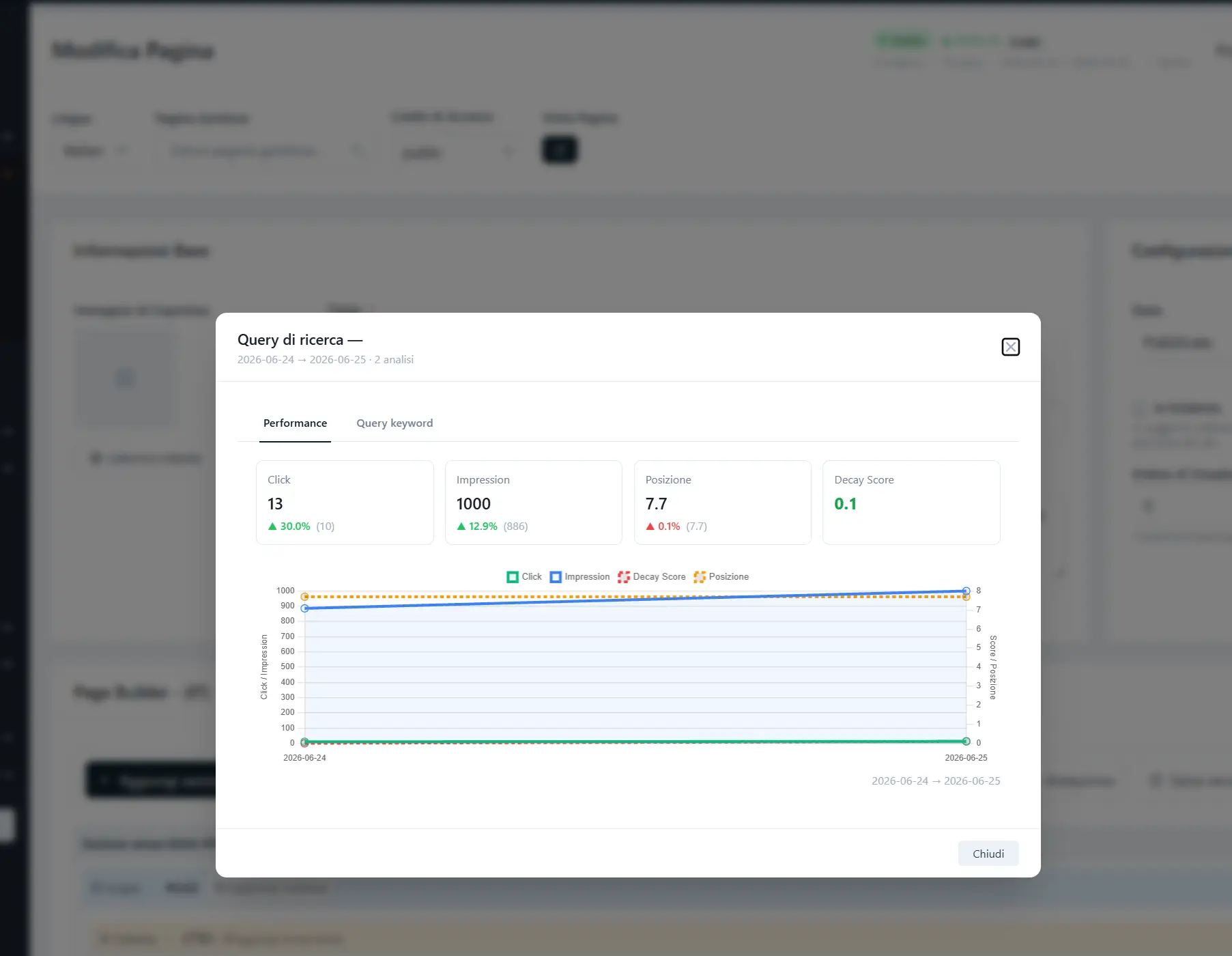
Every day AraLith records clicks, impressions, CTR and average position for each page, building a complete historical series directly from Google Search Console.
A synthetic score that combines click drop, impression drop, position worsening and time since last update. You instantly know how much a page is losing.
Each page is classified by priority (high, medium, low) with an estimate of the monthly clicks potentially recoverable by acting on the content.
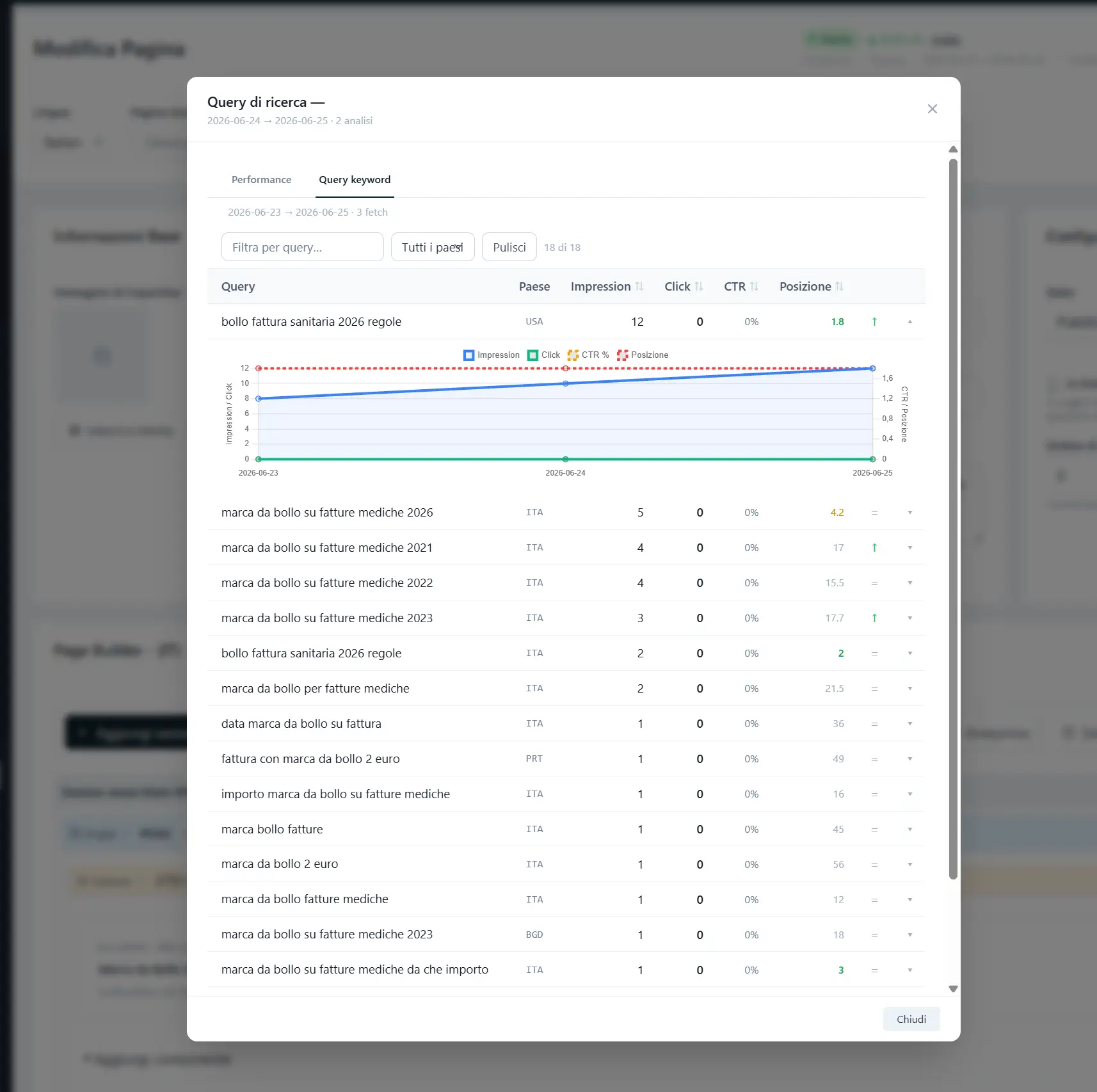
The actual searches for your content are classified by opportunity type: CTR gap, position push, near miss, AEO and GEO displacement from AI Overview.
Recovery proposals respect the brand profile, the verified knowledge base and SEO clusters. No free AI generation: every change is tracked and consistent.
On multilingual sites the decay score and query opportunities are calculated for each language, so you can intervene precisely on the version that needs it.
When your position on Google stays stable but clicks drop, the cause is not a ranking decline: it is GEO displacement. Google shows an AI-generated answer above organic results and users no longer click, even if you are in first position. How to recognise this pattern in your data and how to structure content to remain citable by AI Overviews.
Content that used to perform well can start losing visits and rankings without any apparent reason. This guide explains the main causes of content decay — from freshness to new competitors, from shifts in search intent to Google's AI answers — and how to recognise them before the decline becomes serious.
There's no need to guess where to intervene to recover traffic. Starting from real queries in Google Search Console, it's possible to classify each search by opportunity type and estimate recoverable clicks. This guide explains how to read the data and where to start.
One-time setup, no complex configurations
Authorize GSC access just once. AraLith COS immediately starts collecting daily snapshots of clicks, impressions, CTR and position for every page on your site.
Dashboard and indicator in the editor
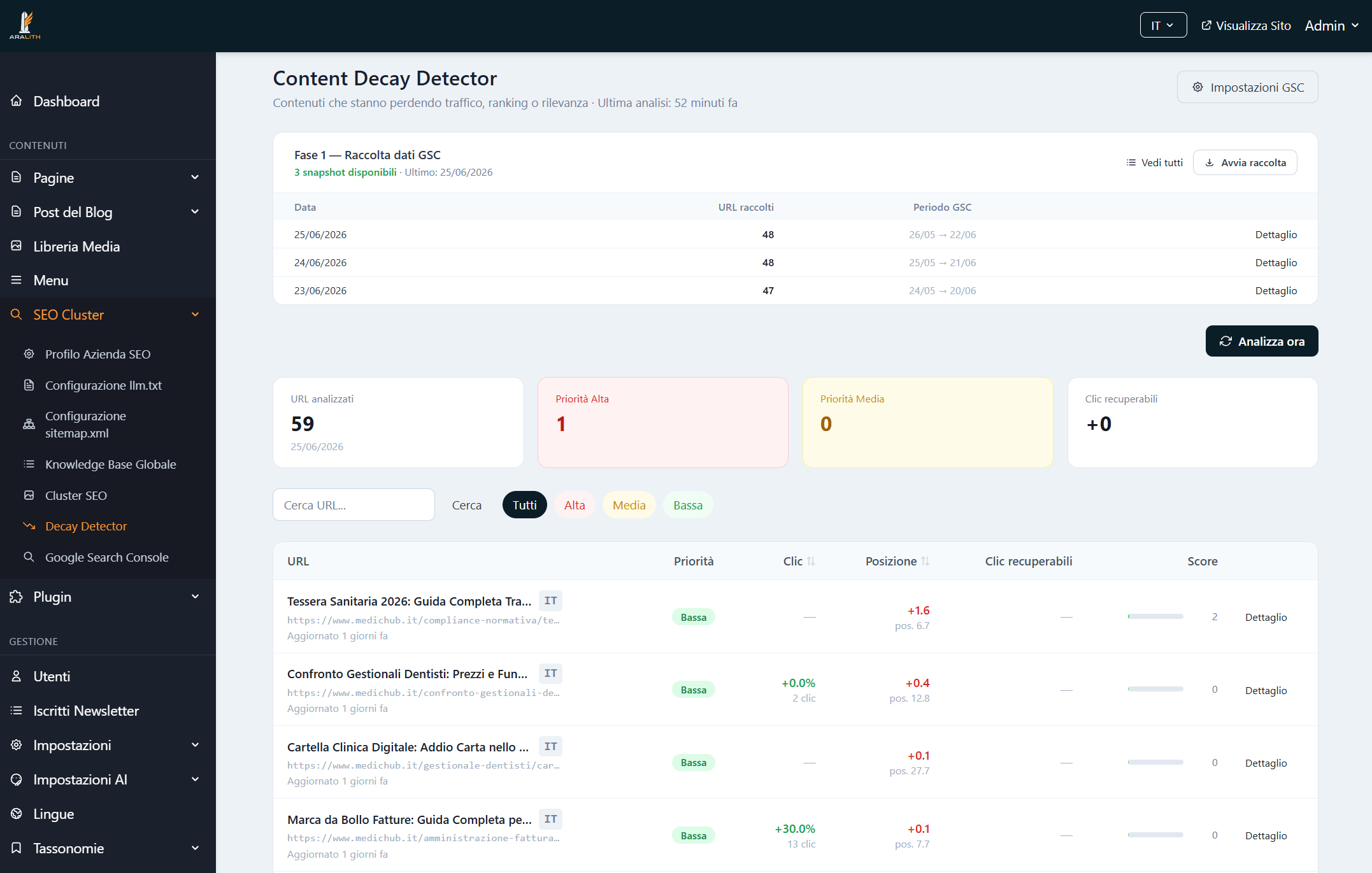
In the dashboard you find pages sorted by priority and score. In the editor you see the content status as you edit it. No manual reports to export.
Where to act and what to do, for every search
For every declining page, you see real queries classified by opportunity type with an estimate of recoverable clicks and the recommended page builder component to add.
Brand-safe, tracked and consistent with the SEO cluster
Optimization proposals respect your brand profile, knowledge base and SEO cluster. Every change is consistent with your positioning. Strategy and editorial judgment remain in your hands.
By connecting Google Search Console once, AraLith COS records clicks, impressions, CTR and average position for every page every day. It calculates a decay score (0-100) for each one and ranks them by priority, with an estimate of the monthly clicks potentially recoverable. You can find everything in a dedicated dashboard and in an indicator directly inside the content editor.
It's almost never a penalty. The most common causes of SEO content decay are: aged content (freshness), new competitors who have published something more up to date, a shift in users' search intent, Google's AI responses (AI Overview) absorbing clicks, or seasonality. AraLith COS cross-references the GSC trend with the date of the last update to indicate the likely cause.
AraLith COS analyses the real Search Console queries for your content and classifies them by type: near miss (almost on the first page), position push (pushable into the top 3), CTR gap (clicks below expectations), AEO (candidates for direct answer) and GEO displacement (AI responses absorbing clicks). For each one you receive an estimate of recoverable clicks, a concrete action and the page builder component to add in order to recover lost organic traffic.
This is the typical signal of GEO displacement: Google shows a generated response (AI Overview) above the results and the user doesn't click, even if you're at the top. AraLith COS recognises this by comparing a stable position with a declining CTR over time, and flags it as an opportunity distinct from a classic ranking drop, because the action required is different: structuring the content to be citable by AI responses.
To automatically monitor a drop in Google positions you need to connect Google Search Console to your CMS and collect daily snapshots of clicks, impressions, CTR and position for every URL. AraLith COS automates this process: every day it updates the data, calculates the decay score and flags the pages that require action, with no need to export manual reports or use spreadsheets.
SEO content decay is the progressive drop in positions, impressions and organic clicks that affects almost every piece of content over time. It typically begins 6-18 months after publication, when competitors update their articles, users' search intent evolves or Google introduces new SERP features such as AI Overviews. Detecting it early — before the drop exceeds 30% of peak traffic — allows you to act with targeted updates rather than having to rewrite the content from scratch.
AraLith COS monitors your pages every day and shows you where to act. Detection is automatic, recovery is governed.
Content created with the support of artificial intelligence.