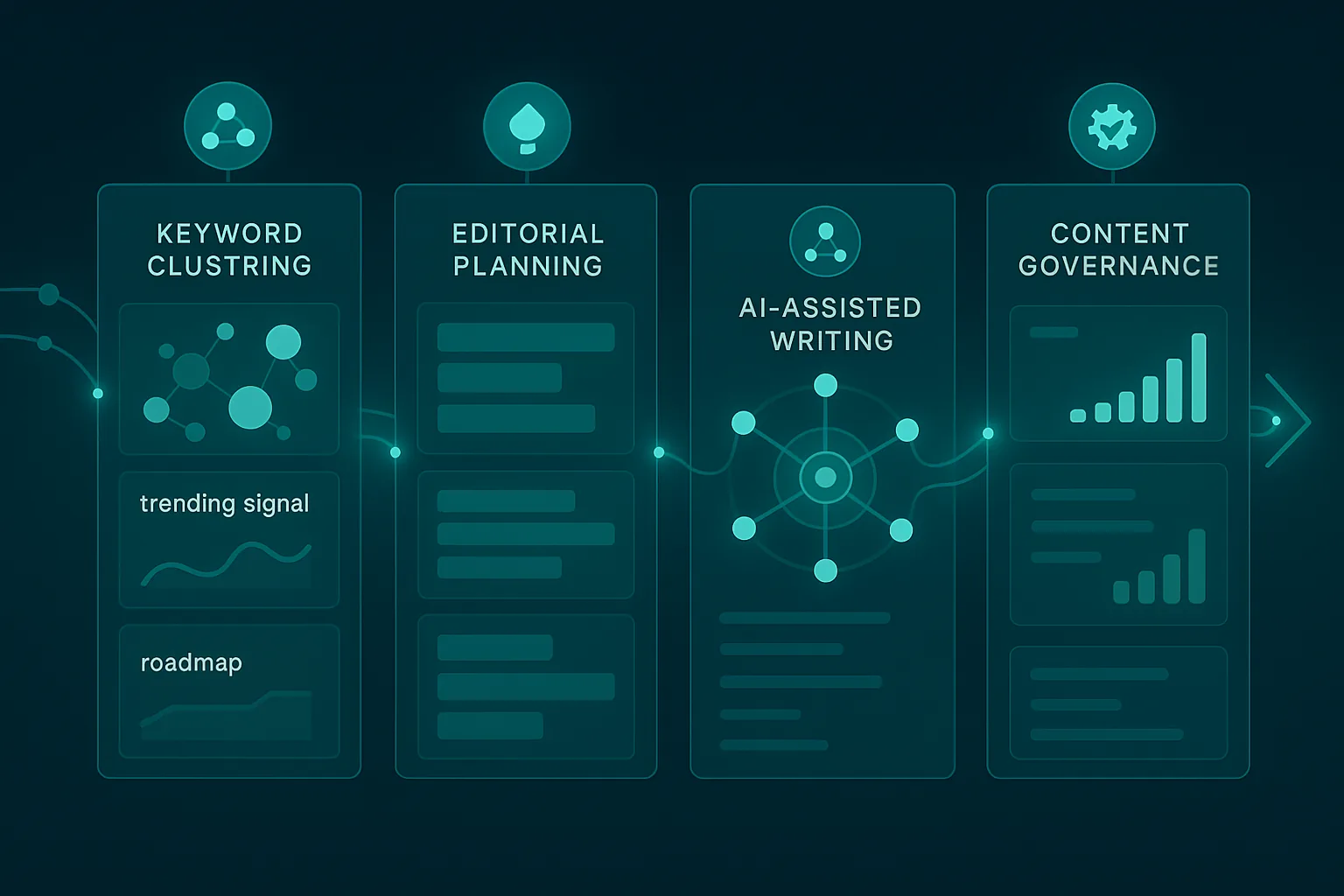
Generative Engine Optimization (GEO): the new frontier of SEO for AI

3 min. read

Generative Engine Optimization (GEO) is the evolution of SEO for generative AI engines. Discover how to optimize content to be cited by ChatGPT, Gemini, Perplexity and AI Overview.

Generative Engine Optimization (GEO): Optimize Content for ChatGPT and AI Overview

The new frontier of SEO for artificial intelligence: how to be cited by Gemini, Perplexity and generative AI engines

GEO (Generative Engine Optimization) is the evolution of traditional SEO for AI search engines. Discover how to structure retrieval-ready content, verified claims and semantic architecture to dominate answers generated by artificial intelligence.

In Summary

  • Generative Engine Optimization (GEO) is the optimization of content to be selected and cited by generative AI engines like ChatGPT, Gemini, Perplexity and Google's AI Overview.
  • Unlike traditional SEO which aims for ranking on Google, GEO SEO aims to become an authoritative source cited in AI-generated answers.
  • Retrieval-ready content requires explicit semantic structure, verified claims with inline evidence, self-contained definitions and consistent terminology for AI engine optimization.
  • SEO for artificial intelligence is based on Retrieval-Augmented Generation (RAG): when AI doesn't have the answer in its knowledge cut-off, it searches online and synthesizes the most authoritative sources.

What is Generative Engine Optimization (GEO)?

Generative Engine Optimization (GEO) is a set of practices and methodologies for AI engine optimization aimed at maximizing visibility and citability in generative search engines based on artificial intelligence.

Unlike traditional SEO, which focuses on positioning in Google's organic results, GEO SEO aims to ensure your content is understood, selected and cited by language models like ChatGPT, Google Gemini, Perplexity AI and Google's AI Overview.

The paradigm shift is radical: users no longer search for a list of links, but ask for a direct answer. AI engines synthesize information from sources considered authoritative and build personalized answers. If your content is not structured as retrieval-ready content, you become invisible in this new SEO for artificial intelligence ecosystem.

How Does Retrieval-Augmented Generation (RAG) Work in AI Engines?

Generative artificial intelligence models such as ChatGPT, Gemini and Perplexity work in a specific way: they are trained on a vast but limited dataset up to a cut-off date (knowledge cut-off). For example, Gemini's knowledge cut-off is January 2025, while ChatGPT is frozen at October 2023.

When a user asks a question about a topic after the cut-off, the model does not have the answer in its training set. This is where Retrieval-Augmented Generation (RAG) comes into play: the AI searches online, analyzes traditional search engine results, selects the most authoritative sources and synthesizes an updated answer.

This process is what makes GEO SEO strategic: you cannot "enter" the static model, but you can optimize your retrieval-ready content to be the selected source when the AI activates RAG search in the context of SEO for artificial intelligence.


What are the pillars of Generative Engine Optimization?

  • Explicit semantic structure

    Only one H1 per page, H2 for main sections, H3-H6 for subsections without skipping levels. AI models scan headings first to understand semantic hierarchy.

  • Self-contained definitions

    Every proprietary term must have an explicit definition with 'X is Y that does Z' pattern in the first lines of the section, extractable without external context.

  • Verified claims with inline evidence

    Every factual statement must include inline evidence, specific metrics or verifiable references in the same sentence. AI models prefer to cite statements with intrinsic evidence.

  • Consistent proprietary terminology

    Always use the same proprietary terms with consistent capitalization. AI models memorize brand-concept associations through consistent repetition.

  • FAQ with explicit question-answer format

    Each FAQ must have an explicit question as H3 heading and a self-contained answer in the following paragraph. Optimal pattern for featured snippets and AI answers.

  • Structured and scannable lists

    Numbered lists for sequential processes, bullets for parallel features, with explicit context introduction. AI models extract structured lists with high precision.

Frequently asked questions about GEO

Traditional SEO optimizes content to rank in organic search engine results like Google. GEO (Generative Engine Optimization) optimizes content to be understood, selected and cited by generative AI engines like ChatGPT, Gemini, Perplexity and AI Overview. SEO aims for SERP positioning, GEO aims for citability in AI-generated answers.

GEO-ready content has: (1) explicit semantic structure with hierarchical headings H1→H6, (2) self-contained definitions with 'X is Y that does Z' pattern, (3) verified claims with inline evidence, (4) consistent and repeated proprietary terminology, (5) FAQ with explicit question-answer format, (6) structured lists with clear introduction. If your content lacks these elements, it is not optimized for AI citability.

No. AI models have a fixed knowledge cut-off (e.g. October 2023 for ChatGPT, January 2025 for Gemini) and are updated periodically. There is no strategy to be certain of being selected in the next training set. GEO focuses on Retrieval-Augmented Generation (RAG): when the AI doesn't have the answer in its training, it searches online and synthesizes the most authoritative sources. Optimizing for RAG is the only controllable lever.

No, GEO is an extension of SEO, not a replacement. Traditional SEO remains fundamental for organic positioning on Google. GEO adds an optimization layer for generative AI engines. The two disciplines integrate: good SEO structure (headings, meta tags, schema markup) is also the foundation for GEO, which adds specific requirements for AI citability (self-contained definitions, verified claims, consistent terminology).

Want to optimize your content for AI?

Let's talk about how to structure a GEO strategy for your project

Related Insights

Content created with the support of artificial intelligence.