
How to Save Time for SEO Teams with Aralith COS
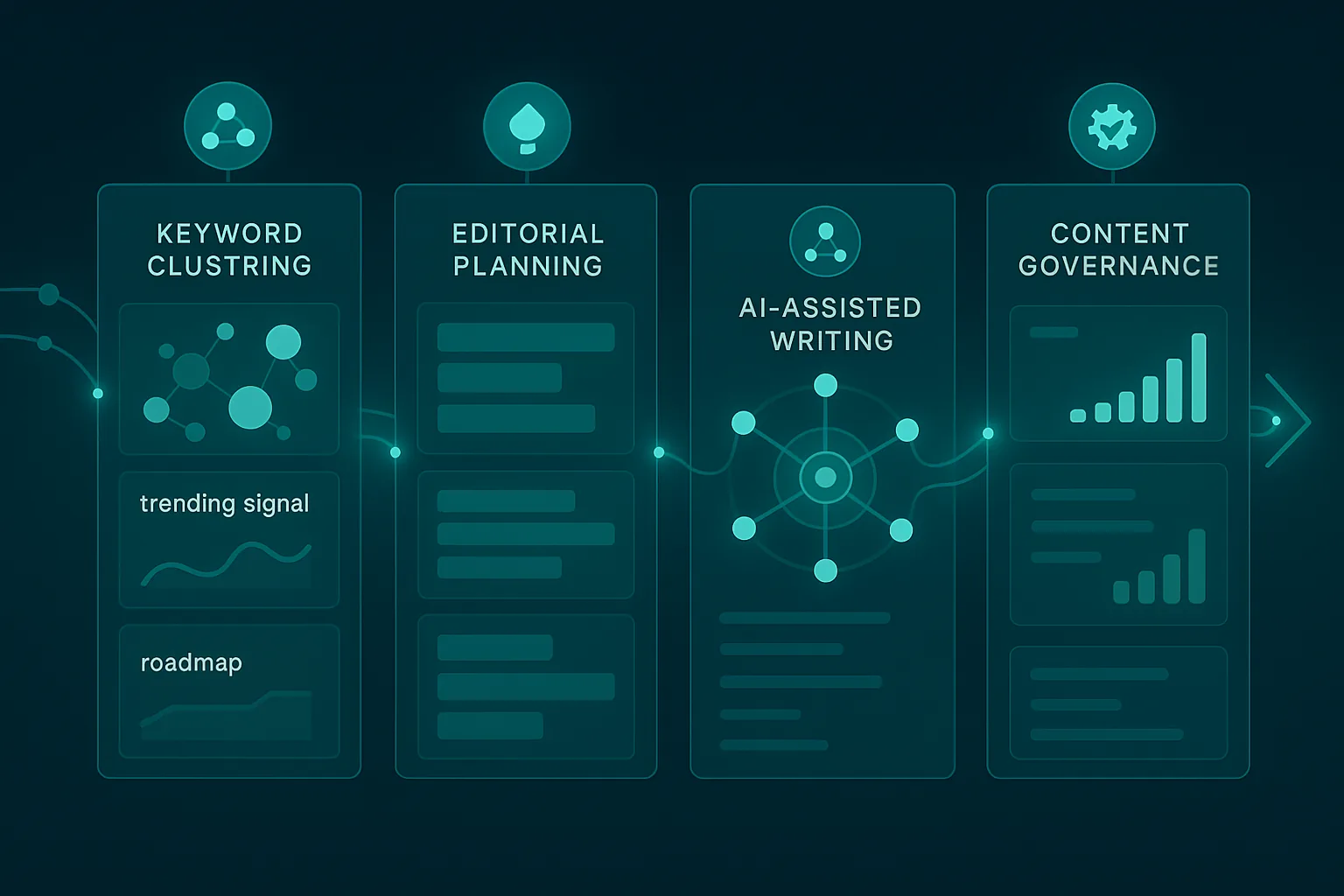
Where SEO teams really waste time and why Aralith COS helps recover it by connecting strategy, execu...

Category
For years, optimising content meant one thing only: ranking it in Google's results. Today the same question can be answered by an AI Overview, by ChatGPT or by Perplexity, and in that case being first does not matter: what matters is being the source the model chooses to cite. They are two different games, played with different tools. This section covers what a piece of content needs in order to be understood by a machine before it is read by a person: entities stated rather than implied, structured data consistent with what the page actually says, short and quotable blocks, and a layer of company knowledge the generation draws on instead of inventing. It is also where we explain the difference between SEO, AEO and GEO without treating them as synonyms: the first is about ranking, the second about answering a question in an extractable way, the third about being recognised as a competent entity on a subject. A page can do very well on the first and very badly on the other two, and that happens more often than people think. The common thread is that semantic architecture is not a cosmetic upgrade: it is how you structure a site so the content stays governed and verifiable even when part of it is written by a model.
Where SEO teams really waste time and why Aralith COS helps recover it by connecting strategy, execu...
Why SEO teams lose continuity switching from one tool to another and how Aralith COS reduces context...
Why SEO clusters break down over time and how Aralith COS transforms them into persistent operationa...
Discover how automated SEO with artificial intelligence transforms content creation: keyword researc...